2014 KIA Cadenza FWD Sedan

Cadenza

    The Cadenza, introduced in the U.S. by KIA in January of this year, is a full-size, front-wheel drive luxury sedan produced in Hwasung, South Korea.  Hyundai Motors owns KIA, and produces a version of the Cadenza named the Azera.  The Cadenza is KIA’s flagship automobile and is the sedan one model larger than the venerable Optima.

I just finished testing a Cadenza provided by Tom Cooney of STI Drive in Denver.  It was painted Smokey Blue metallic and inside it featured the white leather package.  Cadenza’s with white leather interiors also have the technology package ($3,000) and luxury package ($3,000), bringing total M.S.R.P. with freight to $41,900.  Such a loaded sedan was equipped, as you might expect, with smart cruise control, lane departure warning system, blind spot monitor, hydrophobic front window glass, 19” fancy alloy wheels, dual panoramic moon roof, adaptive headlamps (the best I have tested), and four heated seats.  Also on hand was power tilt/telescope steering column, heated leather-wrapped steering wheel, memory power seats, power folding outside mirrors with heat elements, Infinity 12 speaker, 550-watt stereo with satellite radio, ventilated driver bucket, rear window power sunshade, and Nappa (full-grain/dyed) leather trim.  The navigation system was voice-activated, had an 8” screen, and Bluetooth/USB connectivity was included.

Cadenza Interior     Performance of the Cadenza was good, with power supplied by an all-aluminum 3.3 liter (293hp/255lb.-ft.) V-6 coupled with an electronically-controlled six speed automatic transmission with sport mode.  Acceleration is reportedly zero to 60 in 6.2 seconds and top speed is in excess of 150 mph.  EPA fuel mileage ratings are 19 city and 28 highway, not too bad for such a fast car.  The tank holds 18.5 gallons of gasoline.

Looking at the Smokey blue Cadenza is easy on the eyes, with bold chrome- trimmed lower doors and handles, “tiger-nose” chrome grill, dual chrome exhaust finishers, and a body designed by Peter Schreyer.  Schreyer is the German individual that left Audi and now designs cars and trucks for KIA and Hyundai.  He’s pretty good at it, too.  The 19” alloys were quite attractive and were fitted with P245/40R19 94V Hankook Optimo H426 all-season radial tires.

My driving impression of the Cadenza was fine, with nice ride, minimum wind noise, good visibility, and steady guidance.  Interior space is 106.8 cubic feet, which allowed four of us to drive to Loveland in the Cadenza in complete comfort.  The weather in Northern Colorado included sub-freezing temperatures on this night, and I pointed out the seat heat switches to all in attendance.  The Cadenza trunk holds 15.9 cubic feet of cargo.
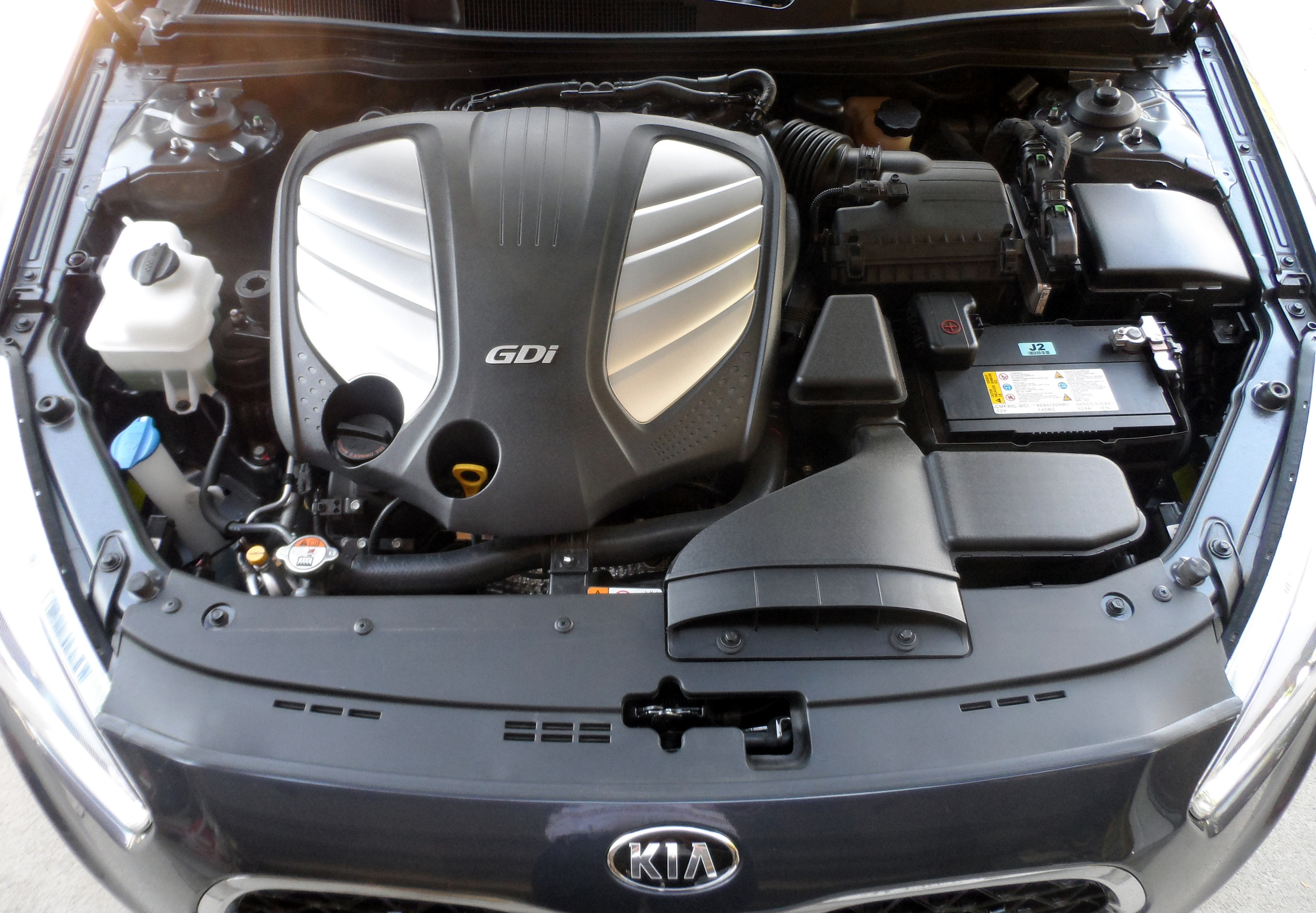
Cadenza Engine

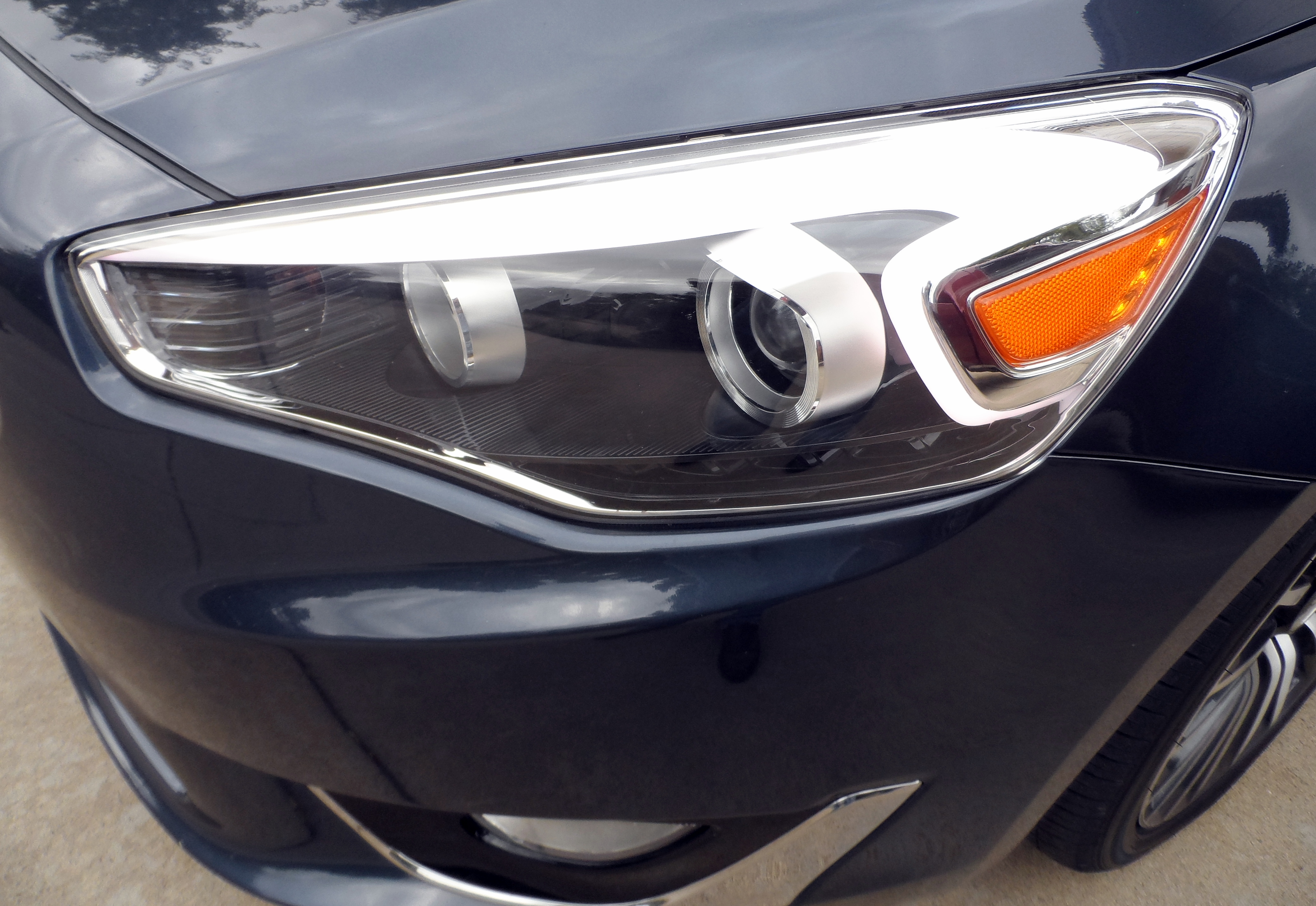
KIA is dipping a toe in the water relative to the luxury car market with this Cadenza.  Prospective shoppers for such a vehicle would do themselves a favor by including an inspection and test drive of this sedan.        Cadenza Headlight
2013 Volkswagen Passat SE FWD Sedan

Passat I

The Volkswagen automobile manufacturing company, founded in 1937 by the German Labor Front, involved production of an inexpensive car for the German common man, and included state-sponsored financing (“five marks a week you must put aside, if in your own car you want to ride”).  Until then Germans could typically only afford motorcycles, but with the advent of this new Volkswagen factory, hundreds of thousands could afford this new “Beetle”, designed by Ferdinand Porsche.  Volkswagen automobiles started crossing the Atlantic after World War II, and sales in the United States peaked in 1970, when the company enjoyed 7% market share.

The 2013 Volkswagen Passat, built in Chattanooga, Tennessee, is a mid-size family sedan that has been produced since 1973.  It’s Volkswagen’s biggest sedan, and comes with a choice of 4 and 6 cylinder gas engines and a diesel 2 liter offering.  The V-6 is a 3.6 liter (280 hp/265 lb. ft.) with EPA mileage ratings of 20 city, 28 highway, and 23 mpg overall.  The Passat gas tank holds 18.5 gallons, and zero to 60 acceleration of the 3.6 is reportedly 6.4 seconds.  That’s seems pretty fast for such an entry, but my recent test of the Passat in Phoenix made a believer out of me.

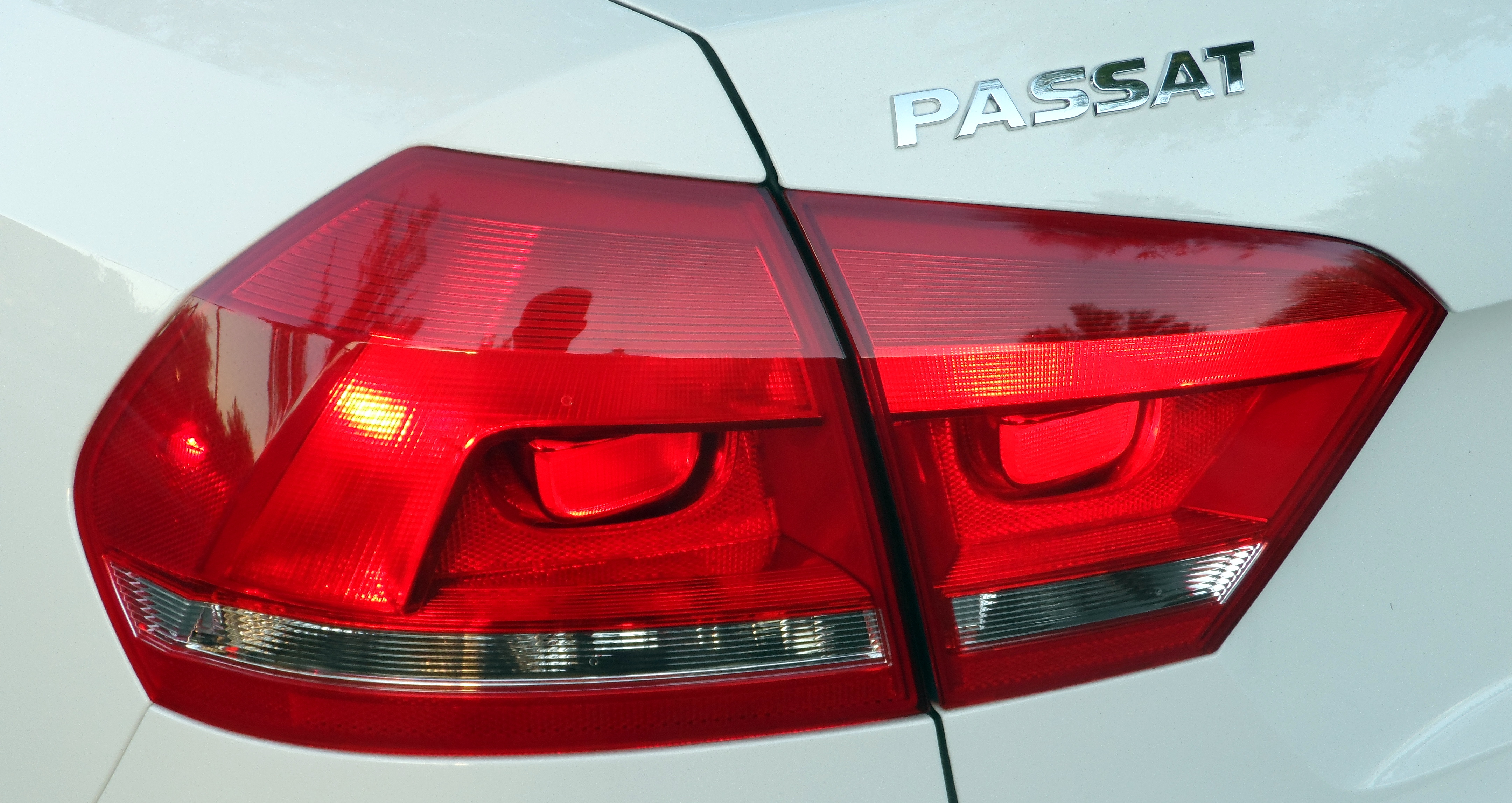
Passat TaillightWhile in Arizona I drove the V-6 SE Passat, which featured V-Tex leatherette seating for five including supportive heated front buckets, 60/40 fold-down rear seat, power driver seat/mirrors/locks/windows (with pinch protection), cruise control, tilt/telescope leather steering wheel, satellite touchscreen radio, power tilt/slide sunroof, Bluetooth connectivity, console-mounted emergency brake, and Fender brand premium stereo.  While putting 400 miles on the Volkswagen, I stayed comfortable and cool in the SE, and as mentioned, passing and getting away from stoplights was a snap.

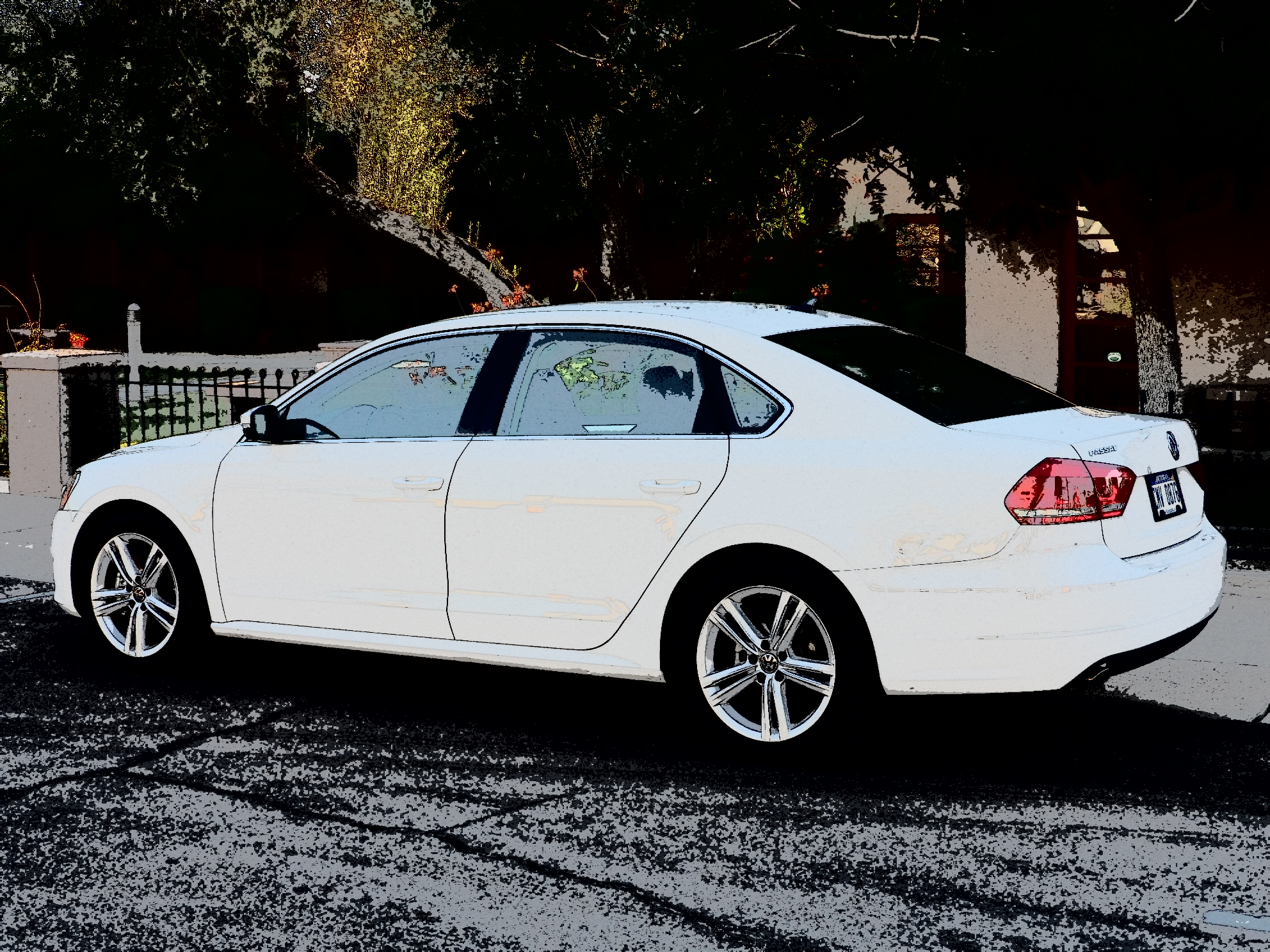
Ride of the SE was particularly satisfying, with guidance and wind noise acceptable, as well.  The car was painted Candy white, and had ten spoke alloy “Bristol” 18” wheels fitted with Hankook Optimo H426, 235/45R18 all season radials.  The windows didn’t roll down entirely out of sight, but I still was successful in getting a nice photograph of the Volkswagen.  The trunk lid was light and easy to handle, with 15.9 cubic feet of cargo space under it.  Halogen fog lights were up front, as were daytime running lights and a bold three-bar chrome grill and iconic “VW” round emblem.  The SE look was pretty much all-American, even though it was styled in Germany.

M.S.R.P. of the press car was $30,030, including freight.  The Passat was named 2012 Motor Trend car of the year, and my experience with it confirmed what the magazine editors discovered during their test.   Passat Painting


“Turn Me Loose” in the KIA Forte EX FWD Sedan

2014 KIA ForteThe latest car that was delivered to my house for testing was the 2014 KIA Forte sedan that was introduced late last year.  The Forte has been around since 2008 but had extensive updates added to the vehicle for the current model year.  My test car came in Abyss blue metallic paint and included black leather seating for five inside.

As of this writing, I do not know where KIA came up with the name for this car, but wonder if they named it after the handsome Fabian, teen idol of the 50’s and 60’s.  Many readers do not know that Fabian’s full name was Fabiano Anthony Forte, or that he was referred to his record producer by Frankie Avalon, another South Philadelphia resident.  Eleven of Fabian’s songs reached the Billboard Hot 100 listing, including “Hound Dog Man”, “Tiger”, and “Turn Me Loose”, and he later got into movies including the part of Pretty Boy Floyd in “A Bullet for Pretty Boy” (1970).

Perhaps KIA’s sedan that I drove was not named after Fabian, but my research into the matter has ended.  I will say, however, that the Forte is a “pretty boy”, as are several Hyundai and KIA vehicles since the hiring of Peter Schreyer by the corporation to head their California design studio.  This year’s model is lower, wider, and longer that those of the past, with a wheelbase of 106.3” and an overall length of 179.5”.  The Forte weighs 2,950 lbs.

My test Forte carried an M.S.R.P. of $25,515, a figure that took me a little by surprise when I withdrew the monroney from the glove box.  Included was $300 for 17” alloy wheels, $2,600 for a premium package, and $2,300 for an EX technology package.  Thus, the car was equipped with sun roof, power/ventilated driver seat, heated front buckets, push button starter, proximity smart key, heated tilt/telescope steering wheel, navigation system, satellite radio, Bluetooth/USB connectivity, and power outside folding mirrors with light stripes.

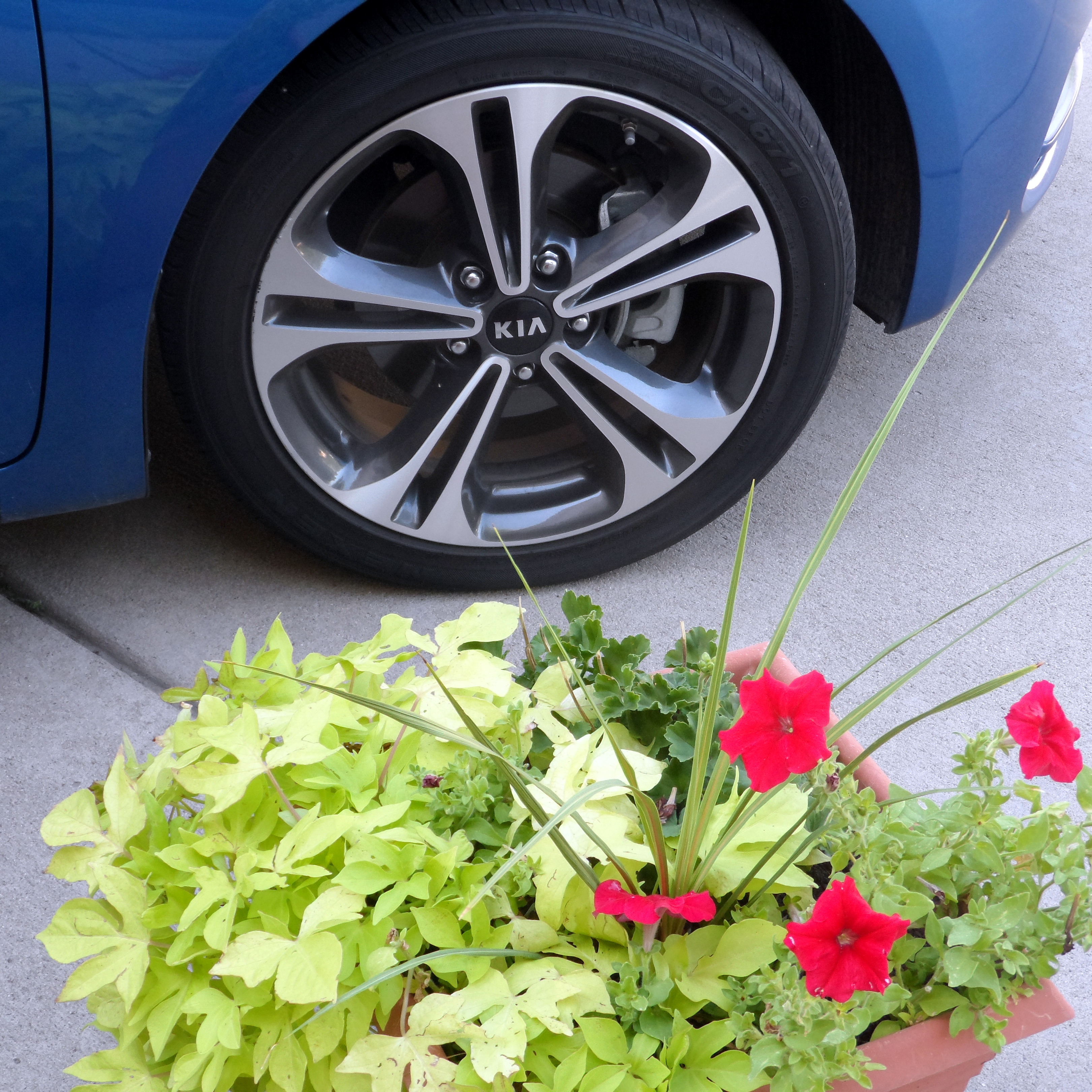
The KIA was powered by a 2.0 liter (173 hp/154 lb. ft.) four cylinder, DOHC, 16 valve engine and featured a six speed automatic transmission with manual shifting mode.  Acceleration of the Forte is reportedly zero to 60 in 7.3 seconds, and fuel economy is rated 24-city and 36-highway.  My observance was of 32 mpg during my week with the car. Forte wheel

Forte interior

My wife and I drove the KIA to Denver for a visit as well as a trip from DIA to Greeley on Highway 85.  Ride was suitable, guidance was fine, and wind noise was not excessive.  At the airport parking lot and in Greeley I admired the Forte’s small, 34.8’ turning radius.  The car fetched a lot of onlookers with the superb styling I hinted at earlier as well as the well-designed 17” alloys, which were fitted with Nexen Classe Premiere P215/45R17 m/s radials.  Chrome door handles adorned the exterior of the car.

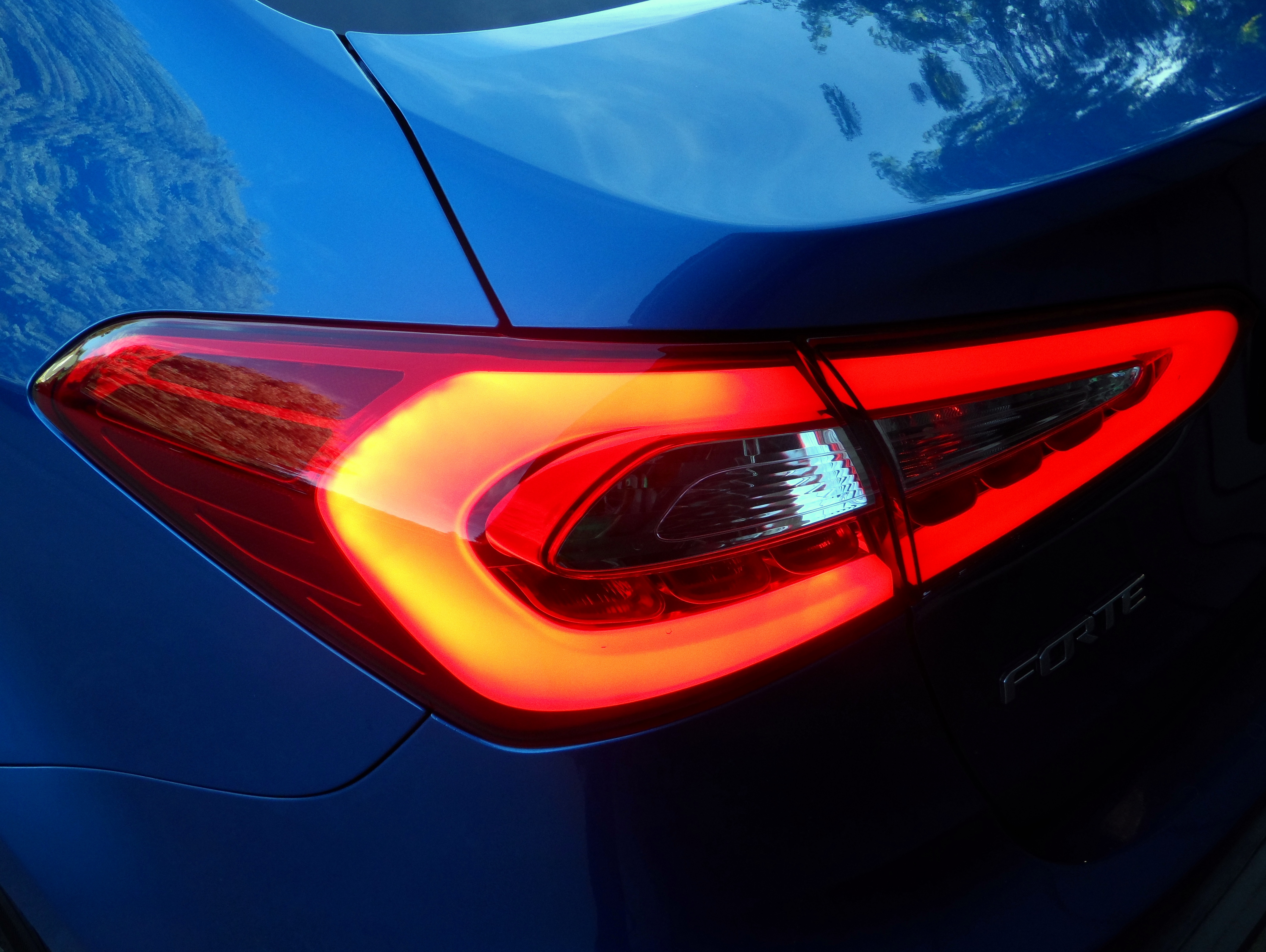
KIA is one of only three auto brands to increase sales in each of the last four years, and the Forte, with about 40,000 sold this year-to-date, is a key component of their success.  I can see why; it’s quite a “Tiger”.                Forte taillight

2013 Hyundai Elantra SE FWD Coupe

2013 Hyundai Elantra Coupe SE

Hyundai, founded in 1967, is the fourth largest auto manufacturer on the planet.  The company owns Kia, and its own Elantra model was chosen North American car of the year in 2012.  The Elantra is the model of Hyundai I tested this past week and it was the two-door Coupe SE, painted Atlantic blue.  It had black leather interior with manually adjustable front buckets and seating for five.

The compact SE Coupe I drove had in it a 1.8 liter, four cylinder, 145 horsepower engine with 130 lb. ft. of torque.  It was mated to a six-speed automatic with manual shift mode.  It’s a front-drive car and can go zero to 60 in about 8.5 seconds, and top speed is reportedly 121 mph.  Fuel economy ratings are 27-city and 37-highway, with my observation coming in at 26 mpg.  The SE Coupe has four-wheel disc brakes, sport-tuned suspension, and 17” pretty five-spoke alloy wheels.  They are surrounded by Hankook P215/45R17 Optimo mud and snow tires.

Strong points?  Well, styling, for one.  The four-door version of the Elantra looks OK, and this Coupe looks particularly attractive.  Fog lights are up front, lighting is present on the outside mirrors, dual bright finish exhaust tips peek out from under the rear fascia, and a rear spoiler is attached to the trunk.  Head- and tail-lights are large and extend onto the sides of the fenders, and the grill is black and bold.  I pushed the button on the key fob to open the trunk and was a little startled at the size of it.  This car would make a nice hatchback, but nonetheless the trunk space is ample at 14.8 cubic feet.  Plus, the back seat folds down in two parts.

Another strong point is the handling and turning radius of the SE.  Ride and  road noise are acceptable, as well.  The Coupe is a little longer than its four-door mate at 178.7”, height is only 56.5”, and weight comes in at 2,816 lbs.  Driving this Hyundai was actually a little more pleasurable as the week went on.

Total M.S.R.P. of the SE was $23,965, with options on board including technology package ($2,350), carpeted floor mats ($95), and freight ($775).  The technology package included a navigation system with 7” screen, backup camera, proximity keyless entry, pushbutton starter, automatic headlights, and 360 watt premium stereo with satellite radio.  Other equipment present included moon roof, power windows (two sides), tilt/telescope, USB/Bluetooth connectivity, cruise control, and leather-wrapped steering wheel and shift knob.

I’ve tested two Hyundais, and both have been good, with this one getting the most looks out on the street.

“Just Ducky” 2013 Cadillac ATS 2.0T AWD Sedan

2013 Cadillac ATS 2.0T Perf. Coll.

    Years ago I owned a 1995 Cadillac (leased, actually) and always admired the six ducks in the logo on the hood and trunk.  I have found through research that those birds were merlettes, present on the family crest of Antoine Laumet de La Mothe, sieur de Cadillac, the founder of the city of Detroit.  That happened in 1701, and Henry Leland named his car after Cadillac when he started his auto manufacturer in 1902.  He added the crest in 1905 and the merlettes were arranged in threes to represent the holy trinity.

My latest test car was a Cadillac; an ATS all-wheel drive sedan with the Performance Collection of assets – aluminum pedals, bolstered buckets, paddle transmission shifters, high intensity swivel headlamps, and Bose surround sound stereo.  Also present were machined-finish 18” alloy wheels ($800), cold weather package ($600), navigation package with backup camera ($795), thunder gray chromaflair metallic paint ($995), and advanced security package ($395).  Those items brought the total M.S.R.P. with freight to $48,375.

Along with those options, the ATS came with Morello red and black leather seating for 5, an 8” full color display, Bluetooth, heated steering wheel/front seats, proximity keyless entry with pushbutton starter, lighted door handles with puddle lights, remote starting, and power mirrors/windows/locks.  No moon roof was present, but the buckets were adjustable with 12-way power (10-way for passenger).  The Cadillac interior featured carbon-fiber trim on the dashboard as well as the door panels, and it stood out.

The engine in the ATS is a 2.0 liter turbocharged 4 cylinder with direct injection and 272 horsepower (260 lb. ft. of torque).  It’s mated to a six-speed automatic with tap-shift control and the aforementioned paddles.  The turbo is a twin-scroll design that can provide 20 lbs. of boost with no turbo lag.  Zero to sixty acceleration is reportedly 5.7 seconds and fuel economy is rated at 20-city and 30-highway.  It burns premium, holds 16 gallons of gas, and I observed a 23 mpg reading for a week of driving.  I drove a V-6 powered, slightly more expensive ATS last year, and my vote goes to this turbocharged 2.0 liter model.

The ride is firm on the ATS and the handling is way above average, and in fact the car feels lighter than its weight of 3,373 lbs.  It  features magnetic ride control, which reacts to road conditions ten times faster than the blink of an eye.  Wheelbase is 109.3”, and overall length is 182.3”.

Styling on the new ATS is excellent, as is the tradition for Cadillacs since the turn of the century.  Twin exhausts are mounted below the rear fascia, and the high intensity headlamp/park lamp assemblies have a distinctive look.  Wheels are a bright finish ten-spoke design fitted with Michelin 225/40R18 Primacy all-season run-flat radials.

In model year 2000, Cadillac removed the little ducks, er, merlettes from the crest on front and rear of all their models.  But I still think the ATS is “just ducky”.

2013 Lexus LS460 F Sport RWD Sedan

Lexus at Phoenician II

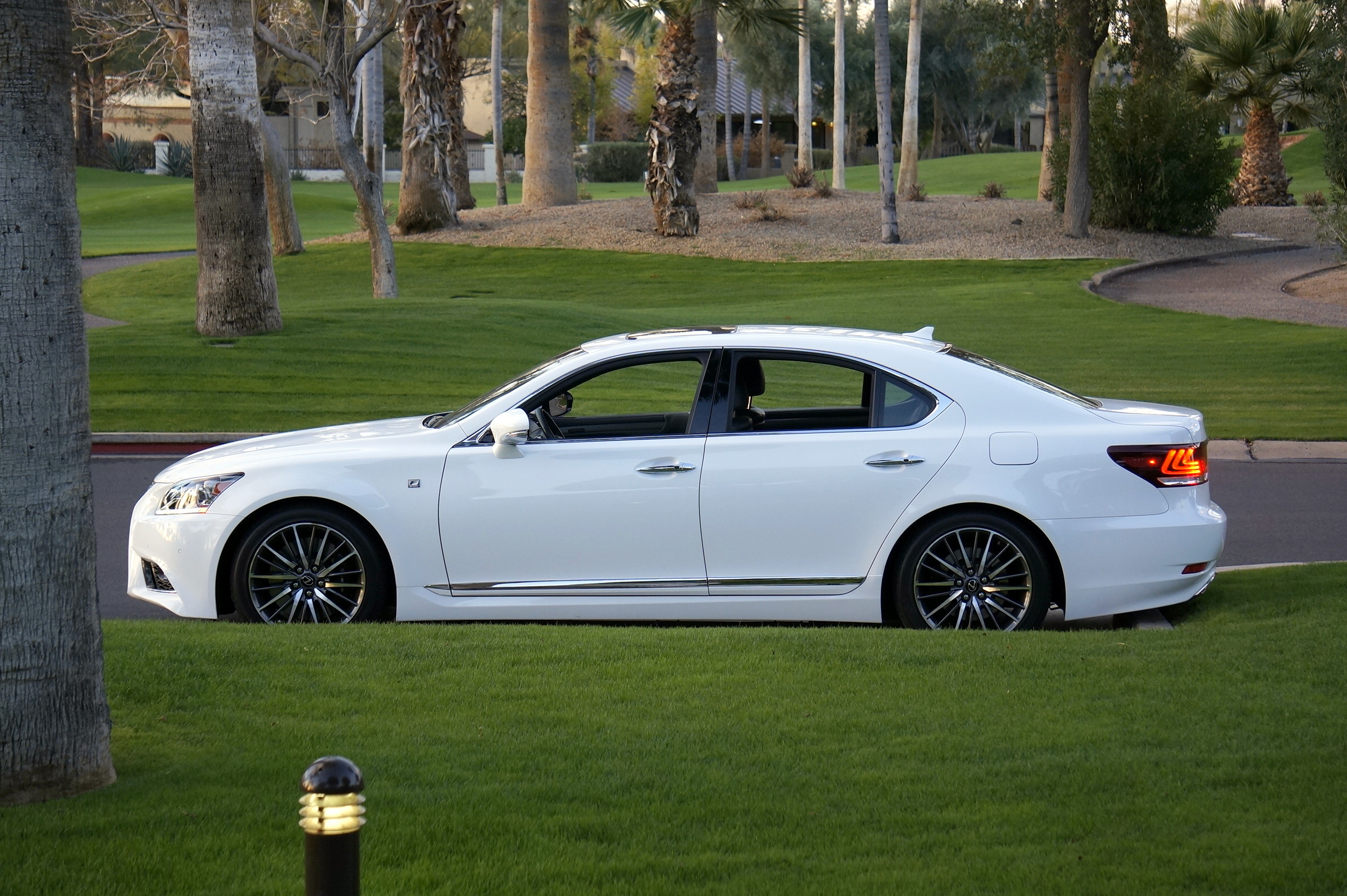
    This past week I was presented a 2013 Lexus LS460 F Sport four-door sedan for testing while travelling in and around Phoenix, AZ on a working vacation.  It was painted Starfire Pearl (white) metallic and inside it was trimmed in black perforated leather.  Of course, the car seats five comfortably because the LS (M.S.R.P. $81,990) is big, with a wheelbase of 116.9” and an overall length of 200”.  Weight is 4,400 lbs.

Boy, did the LS operate with a great deal of aplomb on the turnpikes in the Valley of the Sun!  It had the blind spot monitor, lane departure warning, adaptive cruise control, navigation (12.3” screen!), 10-speaker Lexus stereo with satellite radio, Bluetooth, Lexus Enform app suite, and power tilt/telescope (and heated) steering wheel.  All the windows powered up or down (out of sight), the mirrors folded in when the car was locked and of course a proximity key fob and pushbutton starter button were on hand.  The front buckets were superb and adjustable in 16 (driver) and 12 (passenger) ways.  Also, the embossed (F Sport) headrests powered up or down, just like the windows.  Aluminum trim is present in the cabin on door panels, dash, and on the pedals, as well.  Stitched leather was all over inside, including some real fancy door panels.

The engine for the LS with rear-wheel drive is a 4.6 liter, 386 horsepower V-8 with a fuel economy rating of 16-city, 24-highway, and 19-overall miles per gallon.  Behind it is an eight-speed sequential-shift automatic transmission with manual control-capability and steering column-mounted paddle shifters.  I’ve never driven a car with such a transmission – a truck, yes, but not an automobile.  It provided silky-smooth acceleration, and reportedly the LS will go zero to sixty in 5.4 seconds and top out at 130 mph.  The F Sport rides .39” lower than the standard LS on an air suspension setup, but provides a fun, somewhat aggressive handling package, particularly when Sport S+ mode is selected on the console.

As mentioned, the finish of the car was a striking, metallic white and up front resided LED lighting for day or night attention.  The grill is a specific F Sport blacked-out egg-crate design in the new six-sided Lexus manner, and big air intakes surround the front fog lights.  Taillights have three “L’s” molded within each, and an appropriate amount of chrome is all around the car.  The  wheels were 19” split-ten-spoke forged alloys by BBS surrounded by 245/45R19 summer radials.  Behind them could be seen the big Brembo 14.8” ventilated disc brakes.  They provided plenty of Whoa! to go with all the Go! The twin exhausts puffed out of two sculpted chrome finishers molded into the rear fascia.

As a car to enter into freeway traffic in America’s sixth largest city on a weekday, I cannot think of a better choice than the 2013 Lexus LS460 F Sport.  For dropping off the wife in front of the toney El Chorro Restaurant in Paradise Valley to have dinner; same car.

“Soul, Man” 2013 Kia Soul! Compact FWD Sedan

2013 Kia Soul! Premium

    When I asked the press fleet manager what kind of vehicle was coming here for testing this week, he answered, “Soul, man”, and it brought to mind one of my favorite old songs by Sam & Dave – “Soul Man”.  It was co-written by Isaac Hayes, of “Shaft” fame, who noticed during a television newscast in the summer of 1967 that buildings left standing at the scene of the 12th Street Riot in Detroit had “soul” graffitied on them.  Mr. Hayes subsequently decided that a “Soul Man” was one that could rise above present conditions; perhaps a pride thing for such an individual.  “Soul Man”, the song, was a smash, and reached number two on the Billboard Hot 100 list by the fall of 1967, and also garnered a Grammy Award in 1968.

Sam (Moore, the tenor) and Dave (Prater, the baritone) did pretty well for themselves, too, and performed together for twenty years.  “The Sultans of Sweat”, as they were affectionately known, became members of both the Rock and Roll and Grammy Halls of Fame.  Their “Soul Man” hit was one of the first songs by a black group to top the charts using the word “soul”, helping pave the way to acceptance in white, popular culture.

Like me, Kia has punctuated the Soul name with their Soul! (exclaim) offering at the top of the compact car’s lineup.  It is the model I drove around in these last few days, just like the hamsters in their television advertisement.  The series of ads has attracted a cult following, and it was designated “Automotive Ad of the Year” by Nielsen.

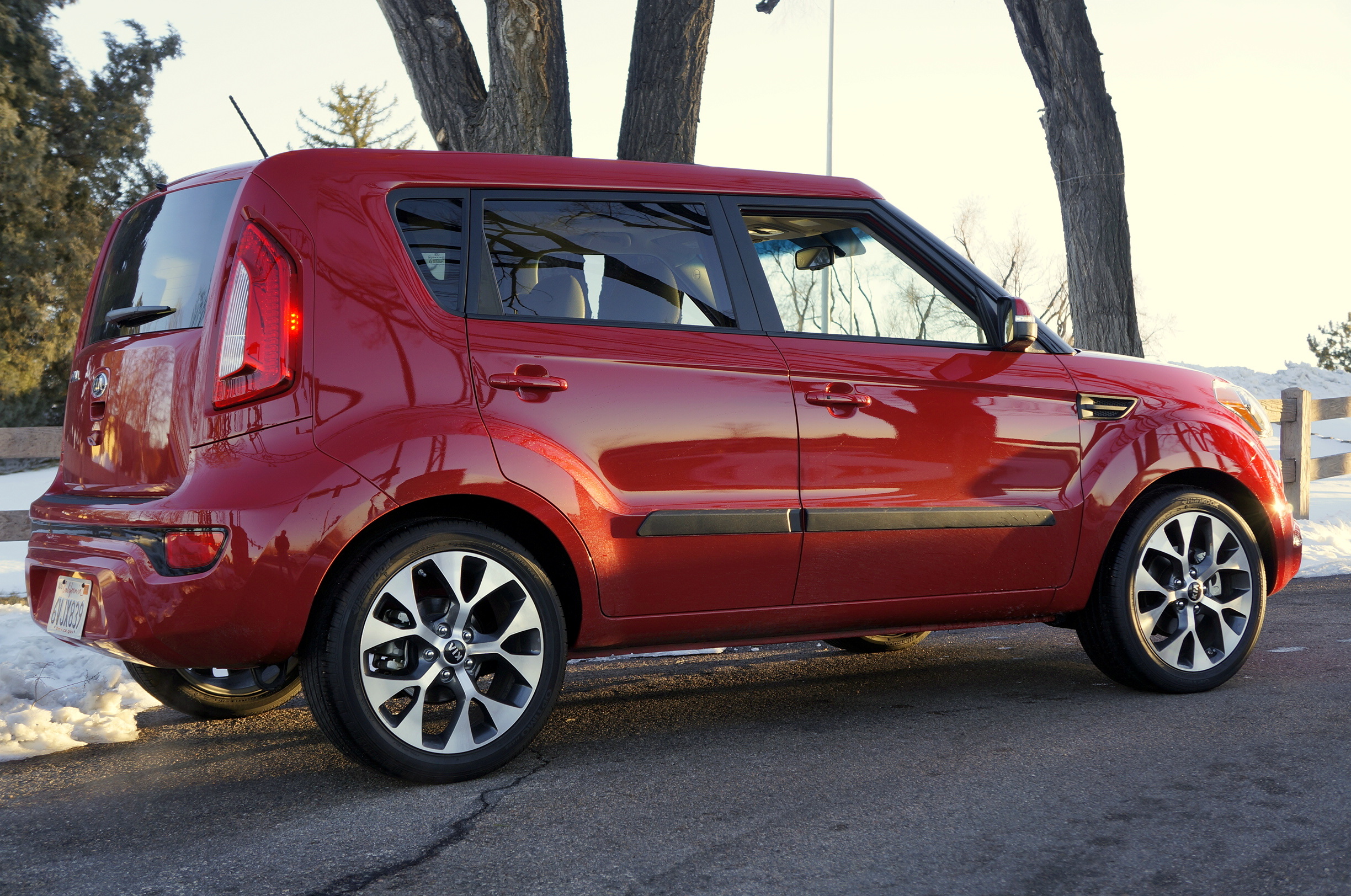
The test Soul was equipped with the premium package ($2,500), which included navigation, backup camera, satellite radio, pushbutton start, proximity keyless entry, leather (and heated front) seating, and auto climate control.  The base price was $19,900, so the total M.S.R.P. came to $23,575 with the premium items and some miscellaneous equipment.  Standard on this model is a moon roof, 18” specific alloy wheels, P235/45R18 Hankook Optimos, Bluetooth connectivity, cruise, power window and lock package, and privacy glass.  The fold-down back seat easily seats 3 passengers, leaving a 19.3 cubic foot cargo compartment in the rear.  The Infinity stereo/CD system has blinking lighted speakers in the front doors that follow the music beat.

Handling in town is nimble and somewhat fun; highway cruising is OK with a rather firm ride.  Fuel economy ratings are 23-City and 28-Highway, and that is with a 4 cylinder, 164 horsepower, 2.0 liter DOHC engine.  A six-speed automatic is positioned behind it with the manual mode arrangement.  Curb weight is 2,700 lbs. for this front-wheel drive compact.

Styling of the Soul is a positive, and of the little “urban crossovers”, it stands out.  I got several positive comments during my time with the car, but not all were as such.  I like the looks of the vehicle, the equipment list, and the interior, so put me down as a fan.

“Beetlemania” 2013 Volkswagen Convertible

VW Convertible @ NBCEI’m mixing metaphors on this date, February 7th, because 49 years ago today the Beatles (band) appeared on the Ed Sullivan show to perform their smash, “I Want to Hold Your Hand”.  The single had sold 1.5 million copies in under three weeks, and Americans were hungry for something enjoyable, just eleven weeks removed from the assassination of President John F. Kennedy.  The Beatles were wildly popular in the UK prior to the Sullivan show, and they toured the U.S. at various dates over the next two years, including Red Rocks Amphitheatre in Colorado on August 26th, 1964.  That was the only Beatles U.S. concert that failed to sell out, and the group was through with live concerts by 1966.

I’m not writing about the Beatles at this time, however, but about the Beetle Volkswagen convertible that was introduced late in the fall.  The company has had quite a smash on its hands, as well, having manufactured over 21 million Beetles since 1938.  Volkswagen was originally founded at that time by the German Labor Front, a Nazi trade union.  The venture included production of an inexpensive car for the common person utilizing state-sponsored financing (“five marks a week you must put aside, if in your own car you want to ride”).  Previously, Germans could typically only afford a motorcycle, but with the advent of a new Wolfsburg factory, hundreds of thousands could afford the new Beetle, which had been designed by Ferdinand Porsche.

The 2013 convertible I got to test was equipped with a five cylinder, 2.5 liter, 170 horsepower engine and six speed automatic with Tiptronic feature.  It came in Platinum gray metallic with Titan black V-tech leatherette buckets for four inside.  The rear seat is kind of a bench seat, kind of a pair of buckets.  Five people should not enter the car, but four were in there on several occasions this week, and had fun.  The VW had pushbutton start, proximity keyless entry, tilt/telescope, electric windows and locks, navigation system, cruise, and a Fender branded upgraded stereo with satellite radio.  Front seats were manually adjustable, but seemed to get out of the way OK for entering rear passengers.  The car has front-wheel drive, and a smallish trunk.  The convertible top electronically races up and down and there exists a cover for it folded up in the trunk (unless installed, which I did with some exertion).  Even with the top up, it’s fun to roll down all four windows and cruise like you’re driving a two door hardtop.

The styling of this new, third generation Beetle is the best yet, with more ample taillights and 18” aluminum/chrome wheels.  Tires are 235/45R18 Hankook Optimo all-season radials.  All on board enjoyed the VW ride, and road noise is acceptable considering the rag top.  Fuel economy ratings are 22-city and 29-highway, with a 19 gallon gas tank that holds regular.

M.S.R.P. for the Volkswagen is $28,495, and that includes freight, technology package, and the Fender stereo.  Friends that visited with me in the presence of the convertible during the week seemed to always express surprise at how little such a car listed for, and that is in the car’s favor.  It garnered my respect, and it was fun to test.

“A Whiter Shade of Pale” 2013 Cadillac ATS AWD

2013 Cadillac ATS AWD Performance Collection

    It may not be a good characterization of the Cadillac ATS test car’s color, but the paint on it was extremely white, and attractive.  It was a Diamond Tricoat (a three-layer painting process) upgraded color that added $995 to the Cadillac’s window sticker.

The song, “A Whiter Shade of Pale” rocketed to No. 1 in the U.K. in 1967, and without fanfare it reached No. 5 in America, as well.  It was the debut number of the British rock band Procol Harum and is now in the Grammy Hall of Fame.  The original manager of the group, Guy Stevens, named the group after a friend’s cat (really?).  One of the song’s co-writers, Keith Reid, overheard someone at a party tell a woman “You’ve turned a whiter shade of pale”, and he couldn’t get the phrase out of his mind.  Procol Harum is one of the most misspelled group names in existence, and in fact I could barely get it registered on this keyboard.

ATS, on the other hand, is easy to spell, but I cannot determine its meaning.  Being Super Bowl weekend as of this writing, all I can come up with is “against the spread”.  In Cadillac parlance, the ATS is the new compact luxury sedan introduced in August of last year.  GM developed the car in their Warren, Michigan technical center and they assemble it down the road in Lansing.  It is Cadillac’s smallest offering.

I picked up my test ATS at Ghent Motors early last week, and immediately was attracted to the Morello Red and Jet Black leather interior with carbon fiber trim.  This car had the “Performance Collection” of assets – aluminum pedals, bolstered buckets, paddle transmission shifters, high intensity swivel headlamps, and Bose surround sound stereo.  Also present were moon roof ($1,050), machined-finish 18” alloy wheels ($800), cold weather package ($600), and a navigation package with backup camera ($795).  Those items, added to the aforementioned paint, brought the total M.S.R.P. with freight to $50,830.

The Cadillac ATS is pretty sporty, featuring magnetic ride control, which reacts to road conditions ten times faster than the blink of an eye.  It is a technology borrowed from Corvette and by Ferrari.  I drove a V6 powered ATS with 3.6 liters and 321 horsepower.  Behind it was a six-speed automatic transmission and 3.27 axle ratio (all-wheel drive).  Zero to 60 elapsed time is reportedly 5.4 seconds and top speed is 152 mph.  Economy?  City-19 mpg, and highway-26 mpg.

The ATS features athletic, chiseled styling with the LED running lights glowing out front as well as chrome, dual exhaust finishers emanating a distinctive note in the rear.  The alloy wheels are surrounded by 225/40R18 Michelin Primacy all-season run-flat radials.  And light stripes are present on the chrome door handles as are puddle lights under the outside mirrors.

With its ATS, Cadillac has targeted BMW’s 3 Series and its nearly 100,000 annual sales figure.  I’m sure they are hopeful that the ATS will blast off like Procol Harums’ hit song did in June of 1967.  The car certainly won’t “Pale” in comparison to the Bimmer – it may even end up being considered the “Cadillac” of compact luxury sedans.

2013 Lexus ES300h FWD Sedan

2013 Lexus ES300h-001

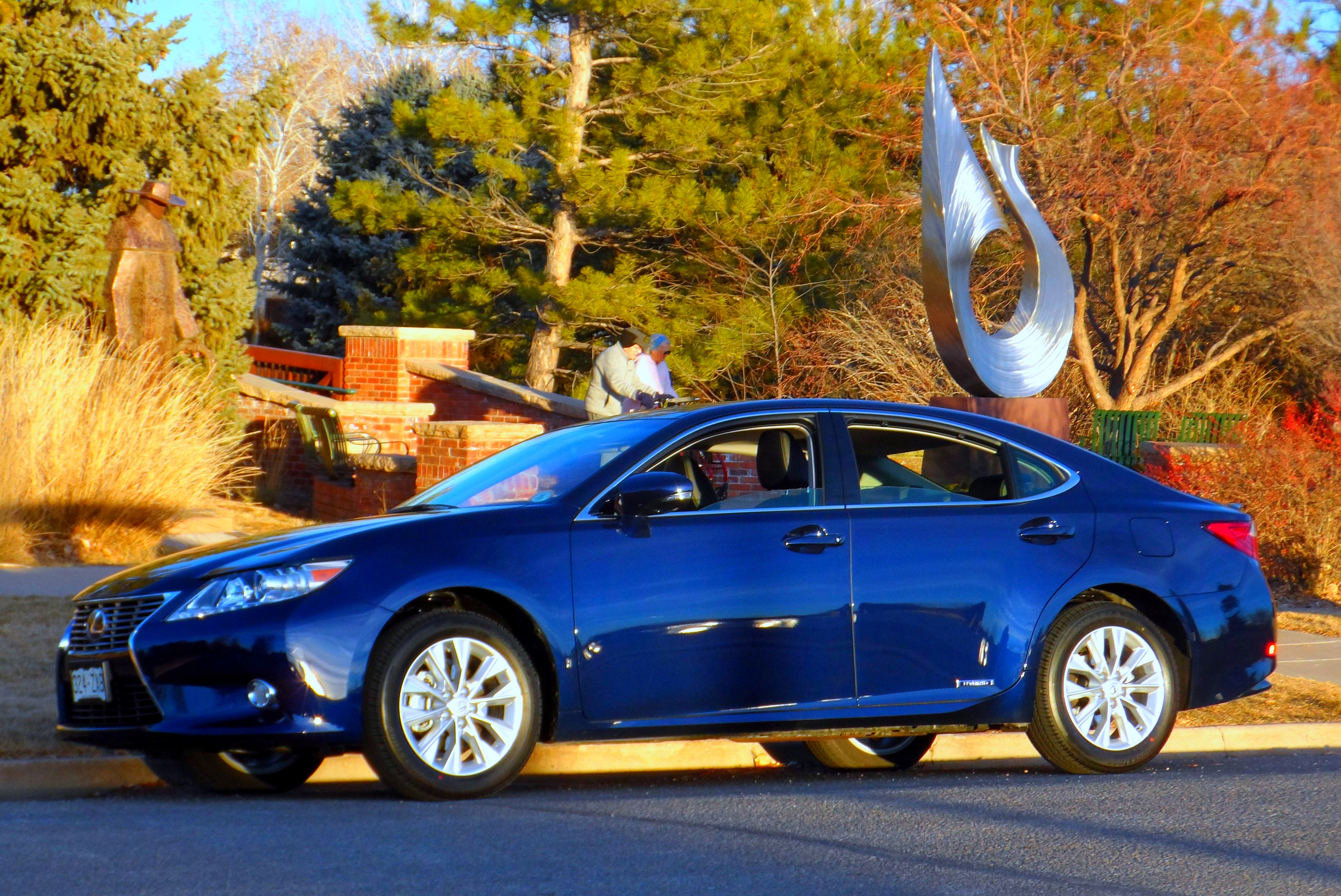
On Tuesday I received a new Lexus to test; the ES series hybrid available since early 2012.  It came in “Deep Sea Mica”, blue metallic paint and it was quite attractive.  I’ve tested six prior Lexus cars and SUV’s, and this ES350 looks like it may end up being my favorite.  Inside it was black perforated “Semi-Aniline” (a dying process) leather throughout, courtesy of the Ultra Luxury package included on the ES.   This added $2,435 to the base price of the Lexus and included power memory heated/air conditioned front buckets, ambient lighting, bamboo trim, power tilt/telescope steering column, rear sunshades, and driver’s seat power cushion extender.

Additionally, the car had blind spot monitor ($500), lane departure alert ($965), navigation package ($2,625), power trunk lid ($400), parking assist ($500), rain-sensing wipers ($155),  and heated leather and wood steering wheel ($450).  Thus the base price and freight pushed the total M.S.R.P. to $47,944, about $10,000 less than the Lexus GS that I drove the first week of 2013.  And this latest car has hybrid technology, although it’s a bit smaller than the GS.

Speaking of hybrid technology, the ES has an Atkinson-cycle, 2.5 liter, four cylinder gasoline engine at its heart, and two electric motor/generators to chip in power.  An Englishman named Atkinson obtained an American patent on the Atkinson-cycle engine over 120 years ago, but the design wasn’t favored until recently because its efficient fuel consumption aspect was more than offset by its lack of torque.  Well, electric motors provide instant torque, so in the hybrid automobile the Atkinson engine goes with an electric motor like peanut butter with jelly.  And in the ES300h, the total package provides 200 horsepower and runs that through a continuously-variable automatic transmission. Reportedly, top speed is 112 mph and zero to sixty acceleration takes 8.1 seconds.

Size-wise, this ES is a luxo-Camry with 111” wheelbase and a 16-foot overall length.  It’s heavier than such a Toyota, though, at 3,700 lbs. with its big battery.  That battery restricts the trunk to 12.1 cubic feet, and on this ES the lid powers up and down.  No restriction is evident in the back seat, however, with seating for three and a big armrest in the middle.  Riding anywhere in the ES300h is a pleasure, and I felt the ride was among the best (of cars I have tested) while going along the Jackrabbit Trail here in Weld County on a ride to Johnstown.  That road is pretty pock-marked and need of repair, but provided little in the way of discomfort inside this car. Outside the car, styling is suitable for me with the exception of the painted door handles.  The new (to Lexus) front-end styling is fine and so is the rear with the exhaust tips concealed, hybrid-style.

EPA ratings for the ES300h are 40-city and 39-highway – electric power allows drivers to save fuel in the city.  My average, driving around Greeley all week, was 34.8 mpg.  It’s hard to say how much driving is necessary to make a hybrid Lexus pay off; there are other factors involved in the calculations.  I noticed at Lexus.com that the base prices are $2,750 apart, so with resale value and pride of ownership, this hybrid Lexus looks like a pretty good bet to me.